How to Cook Achicha with Fiofio (Authentic Igbo Dried Cocoyam Recipe)
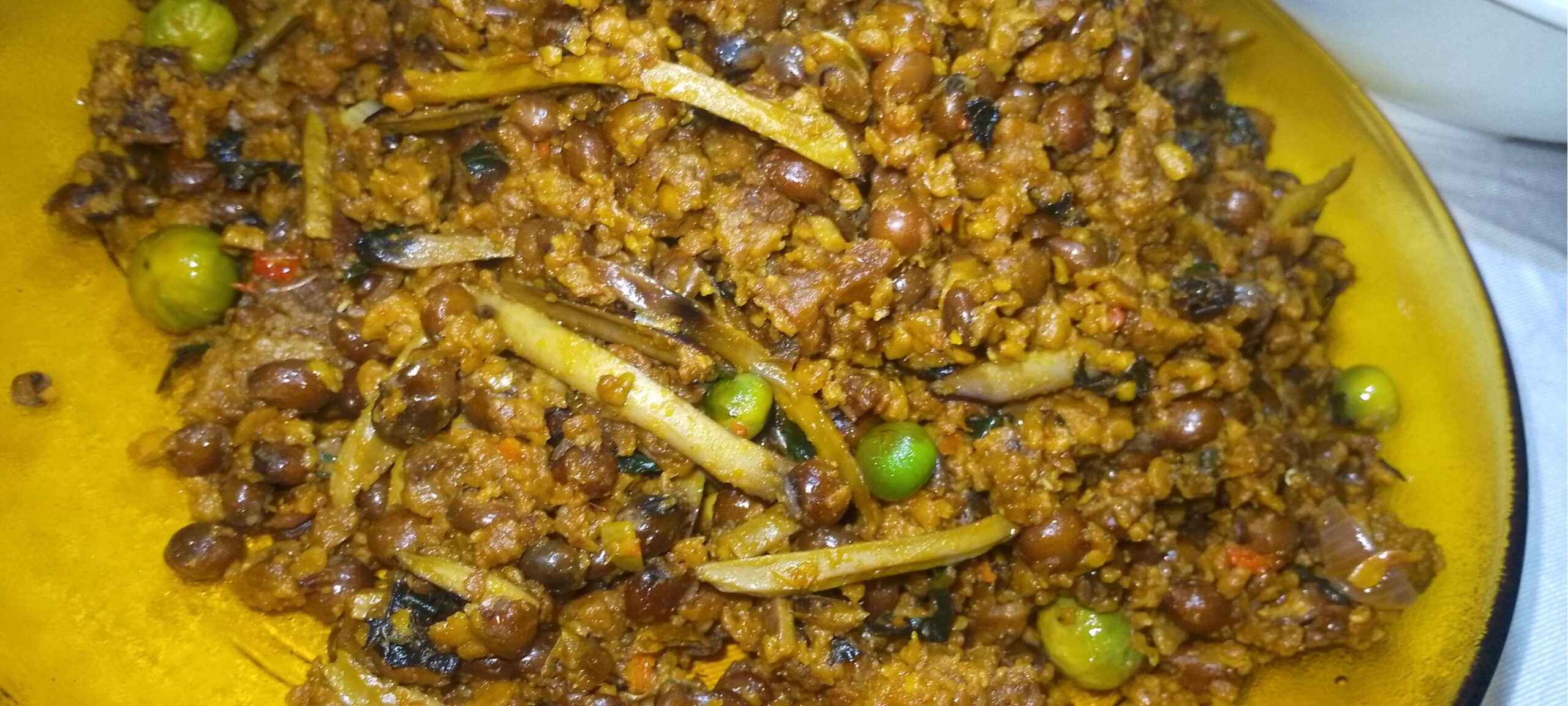
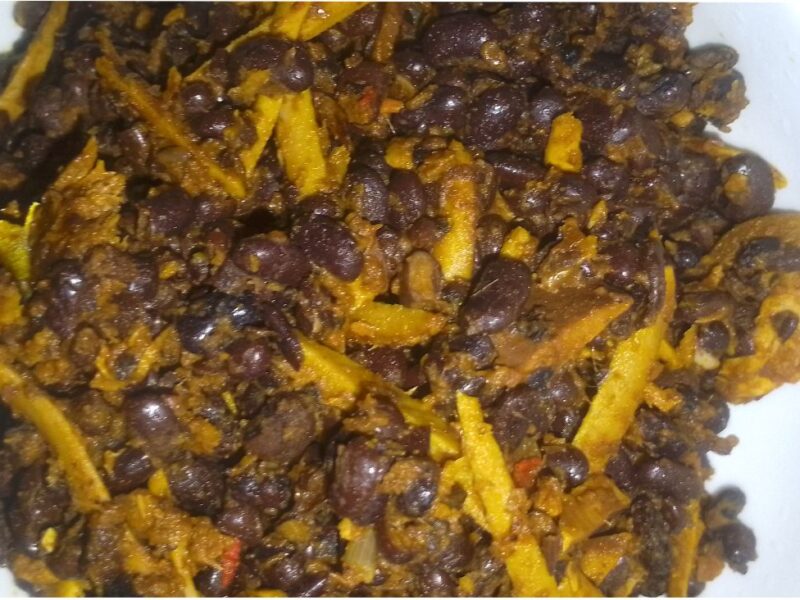
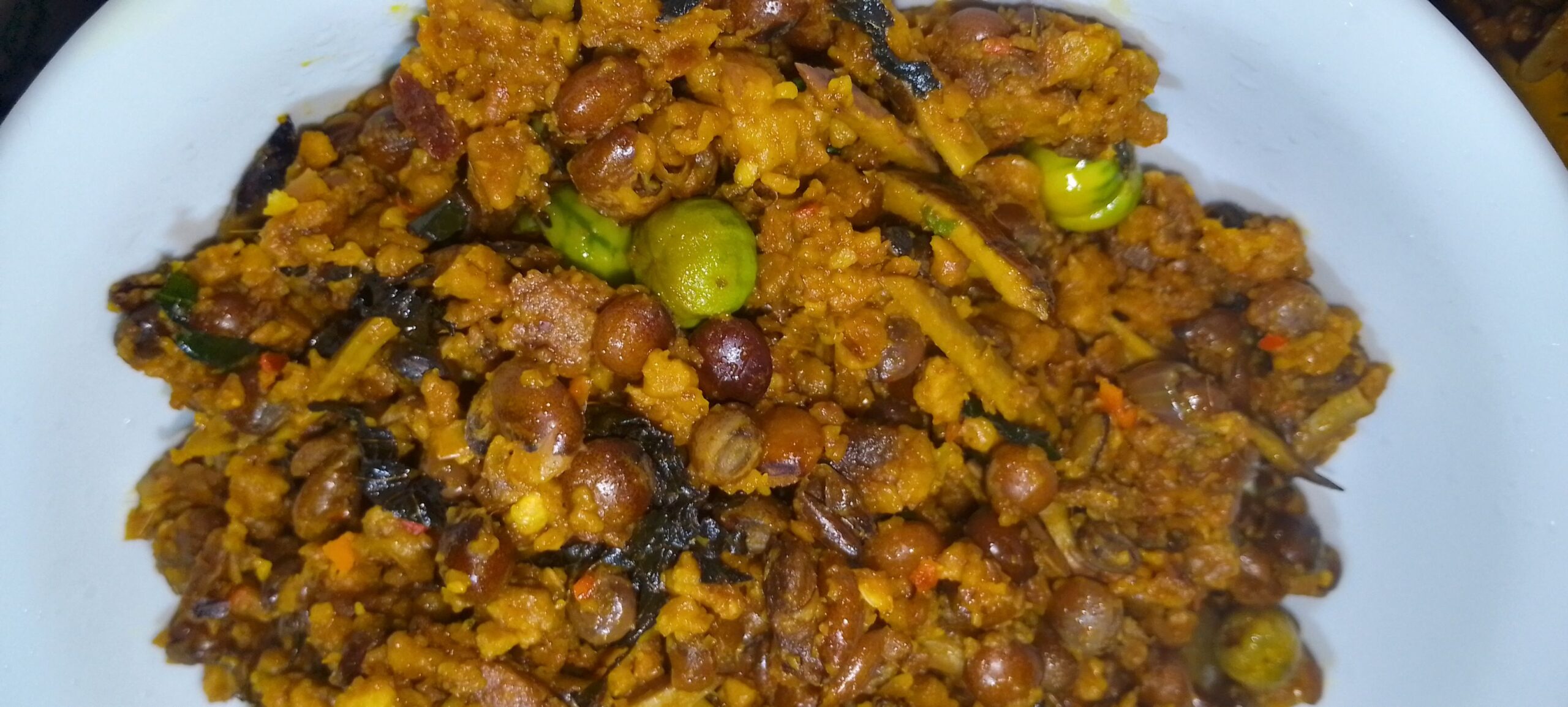
Achicha with fiofio is one of those traditional Igbo foods that carries more than just good taste—it carries memories, culture, and a way of life.
Achicha, made from dried cocoyam, is a traditional Igbo food popularly associated with Enugu and other parts of southeastern Nigeria. It can be prepared with different local beans, including fiofio (pigeon peas), akidi, and orarudi.
In my family, Achicha with fiofio was one of those meals we looked forward to eating. And if you ask me, the best part was sometimes not even the freshly cooked Achicha. We would deliberately leave some for the next day so that my mother could rewarm it with palm oil and a little water.
She would allow it to heat very well, sometimes deliberately letting some of it stick to the bottom of the pot. That crunchy part at the bottom was simply irresistible!
If you have never tried reheated Achicha, I encourage you to try it. You may understand why I am laughing as I tell you about it!
What Is Achicha?
Achicha is dried cocoyam prepared from a particular type of cocoyam that requires thorough cooking before it is eaten.
Traditionally, the cocoyam is cooked for several hours, often from evening until the following morning. Although the cocoyam may become soft before morning, it is traditionally left cooking for much longer to make sure it is properly cooked and that gave it the brownish colour.
This is important because the particular cocoyam used for Achicha may cause itching in the mouth if it is not adequately cooked.
After cooking, the cocoyam is peeled and sliced into pieces suitable for drying. The pieces are then dried thoroughly under the sun or traditionally around the cooking area where heat and smoke from firewood help with the drying process.
The dried pieces are what we know as Achicha.
The Cultural Tradition Behind Achicha
Making Achicha is more than food preparation in some Igbo communities. It can be a social and celebratory activity.
Traditionally, when it was time to peel and process the cooked cocoyam, neighbours and friends could be invited to participate. While the cocoyam was being peeled and sliced, palm oil mixed with native ingredients was shared among those present.
So people were not simply sitting down to peel cocoyam—they were eating, chatting, celebrating and enjoying one another’s company.
The sliced cocoyam would then be spread on a flat basket and placed under the sun to dry. In traditional kitchens, the heat and smoke from the firewood could also help dry the Achicha.
This traditional process is one of the reasons Achicha has such a special place in Igbo food culture.
Achicha Can Be Prepared With Different Local Beans
Achicha is versatile and can be prepared with different traditional legumes.
Some combinations include:
- Fiofio (pigeon peas)
- Akidi, fresh or dried
- Orarudi, another local variety of beans
Today, I am sharing my method of preparing Achicha with fiofio.
Ingredients for Achicha with Fiofio
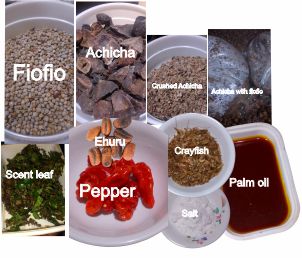
For the Achicha and fiofio
- Achicha (dried cocoyam)
- Fiofio (pigeon peas), already selected and washed
- Water
- Salt
For the palm-oil mixture
- Palm oil
- Onion, sliced
- Blended fresh pepper
- Crayfish
- Ukpaka
- Ehuru (about 4 pieces), ground
- Ahuji (scent leaf), sliced
- Native garden egg, if desired
- Salt to taste
You can adjust the quantities according to the amount of Achicha and fiofio you are preparing.
Some Nigerian Recipes You’ll Love:
- How to cook Moimoi
- How to prepare Akidi with Ugba
- How to cook Igboka (Traditional corn flour delicacy)
- How to cook Nsala Soup (White Soup) Easy Nigerian Recipe
- How to cook Ukwa (African Breadfruit)
- How to cook Egusi Soup with Bitterleaf (Onugbu)
- How to cook Afang Soup
- How to cook Bitterleaf Soup
- How to prepare Abacha
- 6 Natural spice that transforms your cooking
- How to cook Okra Soup with Ugu
- How to cook Egusi Soup with Ugu
- How to prepare Porridge Yam with Vegetable
- How to cook Ogbono Soup with Okra
- How to cook Okpa (Bambara nut flour)
- How to cook Ofe Oha (Oha Soup)
- How to cook Ofe Akwu (Banga Stew)
- Healthy Alternatives to Maggi
How to Prepare Achicha with Fiofio
1. Start cooking the fiofio
Fiofio takes longer to cook than Achicha, so I always put it on the fire first.
After selecting the fiofio, put it into a clean pot and add enough water to cook it for about 30 minutes.
Add about 3 tablespoons of salt, stir and place the pot on the fire.
Allow it to cook for about 30 minutes.
After 30 minutes, sieve out the water and replace it with fresh clean water. Continue cooking for another 40 minutes or until the fiofio becomes tender.
The cooking time can vary depending on the particular variety of fiofio you are using.
If you have a pressure pot, the cooking time will be considerably shorter.
2. Soak and wash the Achicha
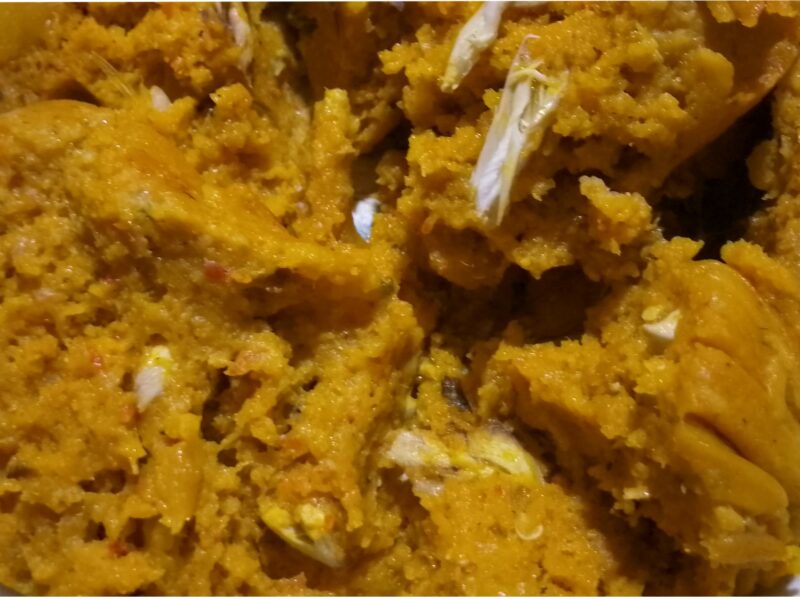
While the fiofio is cooking, prepare the Achicha, pound or grind it to tiny pieces not powder(observe the size of my own in the picture below).
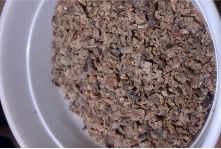
Remember that Achicha is dried, so it needs to be softened and properly washed before cooking.
Put the Achicha in clean water and soak it for about 30 minutes.
Wash it about three times. As you wash it, you will notice that the water becomes clearer.
After washing, drain the Achicha thoroughly with your hands.
3. Cook the Achicha
Put the washed Achicha into a food-grade nylon bag and tie it properly.
Place it inside the pot with the cooking fiofio.
As the fiofio continues cooking, the Achicha will cook and soften at the same time.
If you prefer not to use food-grade nylon, you can use a sieve. However, the sieve should be raised above the water level using small clean pieces of wood or another suitable support.

Do not allow the Achicha to sit directly in water.
The purpose of raising it above the water is to allow it to cook without becoming submerged. Too much water can make the Achicha melt or become overly soft, which can affect the final texture of the dish.
4. Check the Achicha for doneness
As you check the fiofio for tenderness, also check the Achicha.
Press an Achicha piece lightly with your finger.
If you can press it easily and it feels soft, it is ready.
If the Achicha becomes soft before the fiofio, remove it from the pot and keep it aside while the fiofio continues cooking.
5. Combine the cooked Achicha and fiofio
Once both the Achicha and fiofio are properly cooked, pour the fiofio into a sieve to drain off the cooking water.
Combine the cooked Achicha and fiofio and mix them gently.
Set them aside while you prepare the palm-oil mixture.
6. Prepare the palm-oil mixture
Place a clean pot on the fire, add palm oil and little amount of water that would sustain it not to bleach while light cooking the oil.
Add sliced onion and salt.
Use enough oil to prepare the mixture properly without allowing the oil to burn or bleach.
Add:
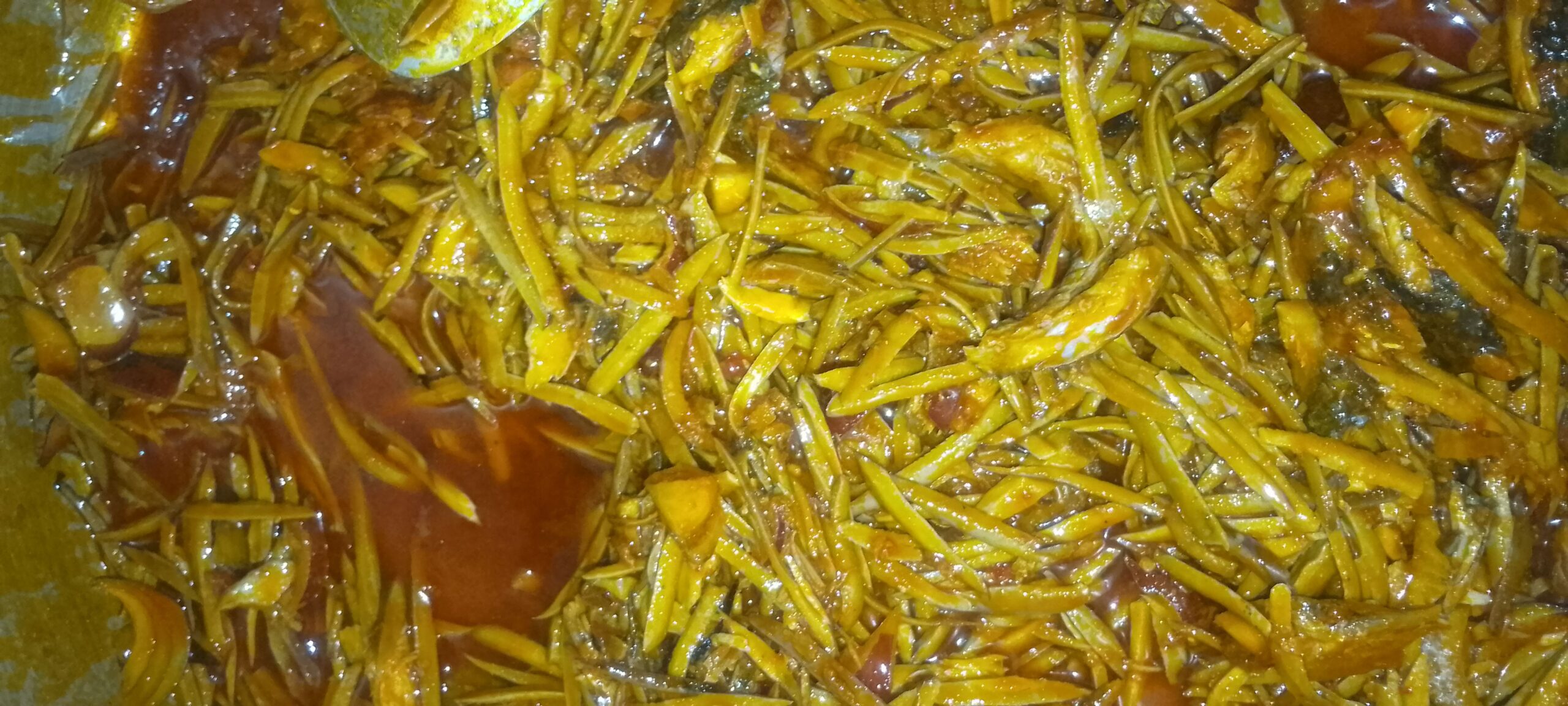
- Ukpaka
- Blended fresh pepper
- Crayfish
- Ground ehuru
Allow everything to cook together for about 2 minutes.
At this stage, remember to keep some of the fresh blended pepper aside.
We are going to add it later when turning the Achicha and fiofio.
7. Add the Achicha and fiofio
Pour the cooked Achicha and fiofio into the palm-oil mixture.
Begin stirring gently so that the palm oil and native ingredients coat the Achicha and fiofio evenly.
Then add the sliced ahuji (scent leaf), native garden egg and the fresh blended pepper you kept aside.
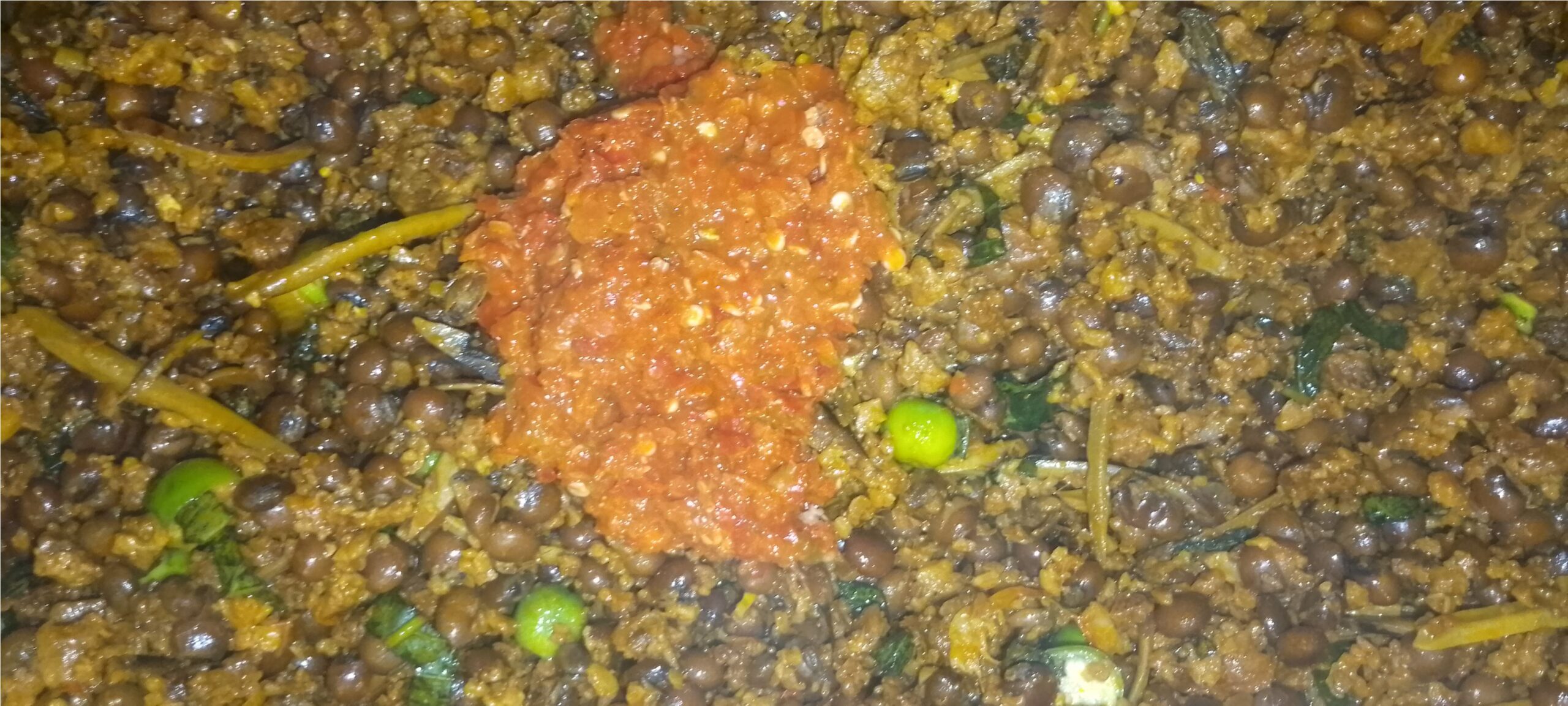
This is one of my favourite parts of the cooking process.
The combination of fresh pepper, scent leaf, garden egg and ehuru gives the food an incredible aroma.
The fresh pepper is not fried before it is added, and when it hits the hot Achicha and palm-oil mixture, the aroma is wonderful.
Continue stirring until everything is well combined.
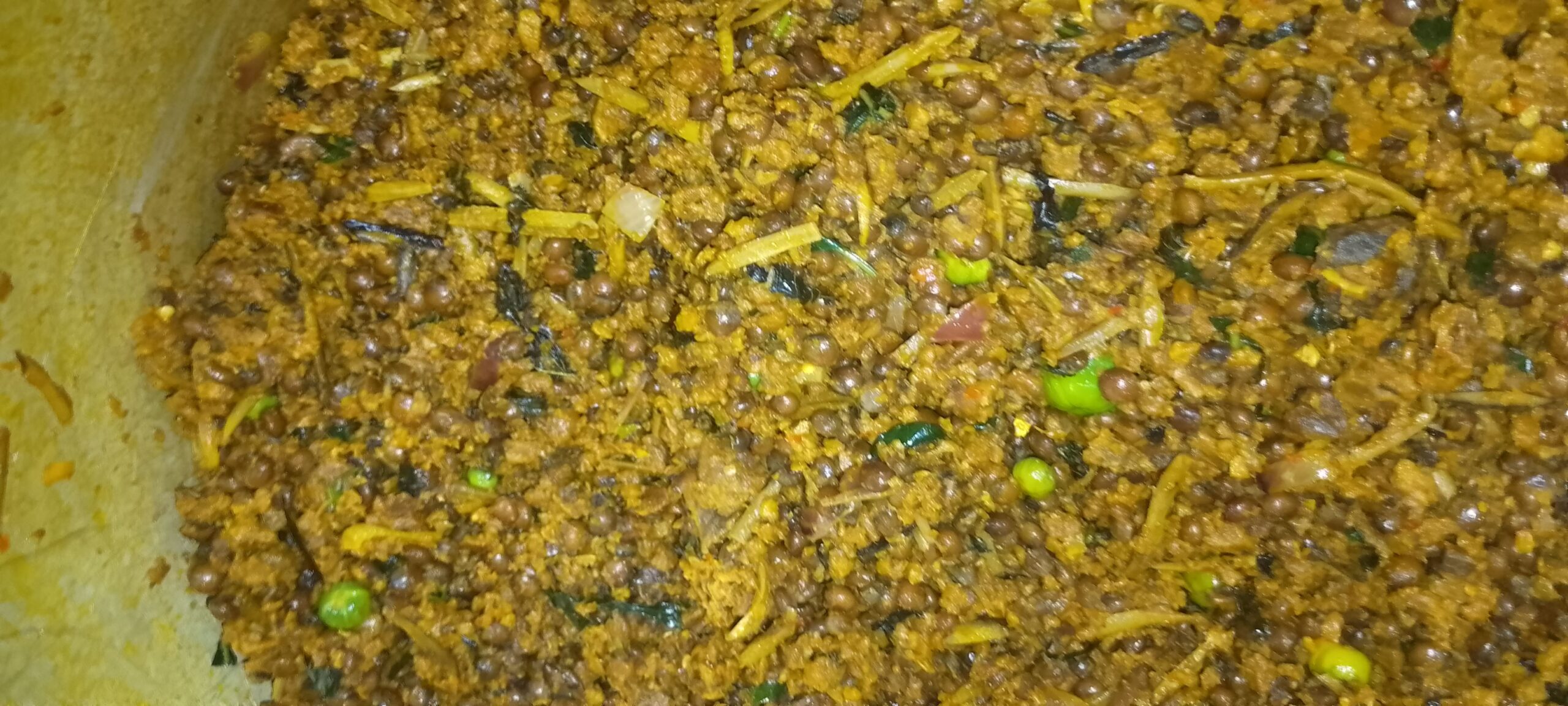
Taste for salt and adjust if necessary.
Turn off the heat.
Your delicious Achicha with Fiofio is ready!
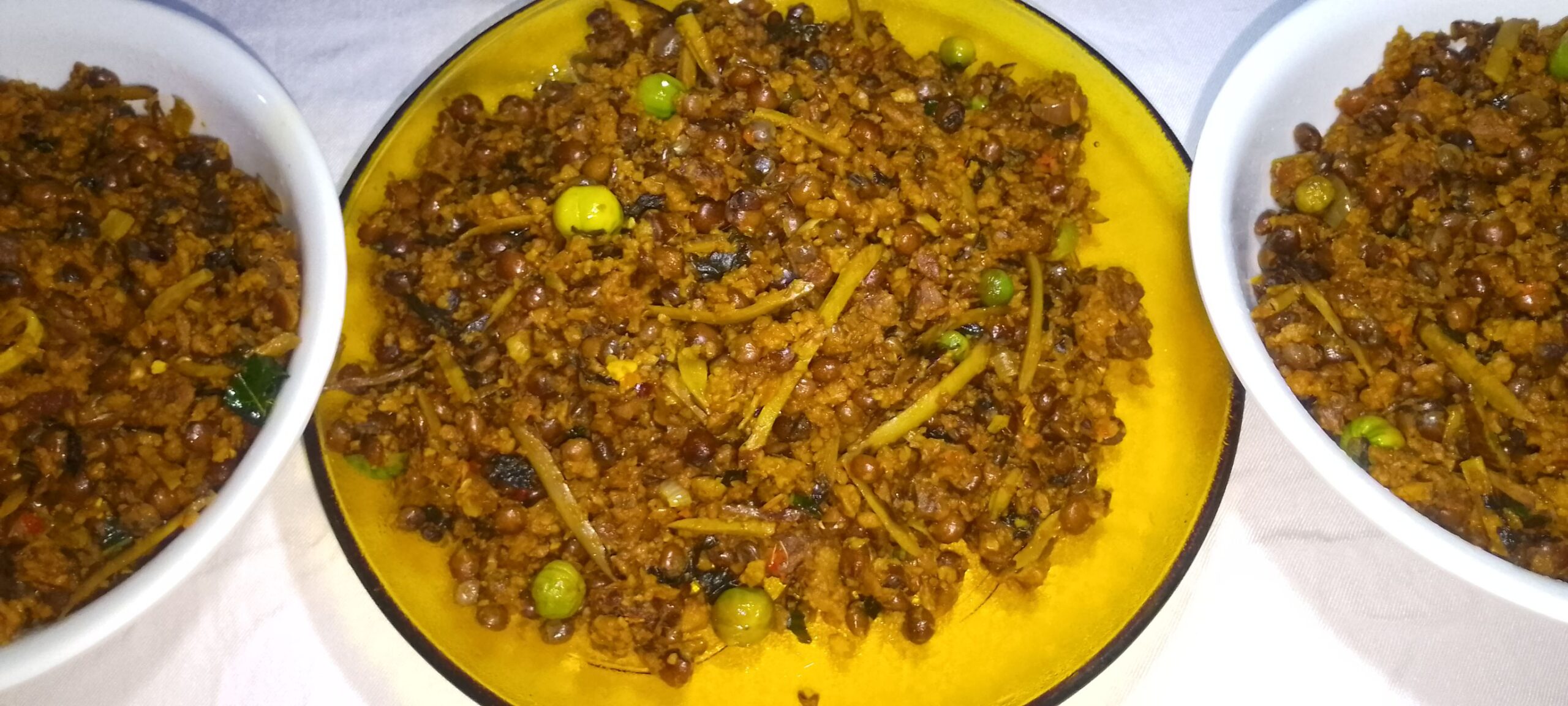
Why I Love Fresh Pepper in Achicha
Although I add pepper to the palm-oil mixture while cooking, I like to reserve some fresh blended pepper and add it while turning the food.
That fresh pepper gives Achicha a different kind of aroma and flavour.
And when the pepper is not hot enough for my liking, I sometimes bite fresh chilli pepper and eat it together with the Achicha.
The combination is wonderful!
The Best Part? Reheating Achicha!
Let me tell you something about Achicha that I learned from childhood.
Whenever my mother prepared Achicha, we would intentionally leave some portion for the next day.
Why?
Because reheated Achicha is something else!
To rewarm it, add palm oil and a small amount of water.
Allow it to heat very well.
And if you want to experience what we enjoyed as children, allow some of it to stick to the bottom of the pot.
That crunchy Achicha at the bottom is so delicious!
It is one of those little food memories that stays with you.
What to Eat With Achicha with Fiofio
Achicha with fiofio is already a complete and filling meal, so you can enjoy it on its own.
It can also be enjoyed with:
- Palm wine
- Your favourite soft drink
- A cold drink of your choice
And if you are serving it at a traditional gathering or celebration, be prepared—people may rush for it!
Important Tips for Cooking Achicha with Fiofio
Cook both ingredients until properly soft.
The fiofio and Achicha need to be well cooked for the best texture.
Do not drown the Achicha in water.
This is especially important. If the Achicha is submerged in water while cooking, it may become too soft or start melting, which can affect the final result.
Do not grind the Achicha into fine powder.
If you are processing your dried Achicha at home, use a food processor and grind it into moderate-sized pieces. You can also take it to an industrial grinding mill. The goal is to break it down into manageable pieces, not powder.
Use a pressure pot if you want to reduce cooking time.
Fiofio can take quite a while to cook, so a pressure pot can help shorten the process.
Keep some fresh pepper aside.
Adding a portion of fresh blended pepper while turning the food gives it a wonderful fresh pepper aroma.
Don’t forget the ehuru and native ingredients.
Ehuru, ahuji, ukpaka, crayfish and native garden egg give this traditional dish much of its distinctive flavour and aroma.
Can Achicha with Fiofio Be Stored?
Yes. Leftover Achicha with fiofio can be refrigerated and reheated when you are ready to eat it.
In fact, in my family, reheating was not just a way of dealing with leftovers—it was part of the enjoyment!
Try reheating it with palm oil and water, and allow it to heat properly. If some of it becomes slightly crunchy at the bottom of the pot, you may discover a new favourite part of the meal.
Final Thoughts
Achicha with fiofio is more than just a meal to me.
It reminds me of home, childhood, traditional cooking and the way food brings people together.
From the communal peeling of cocoyam to the drying of Achicha, and finally to the preparation of this delicious meal with fiofio, every stage carries a piece of Igbo culinary heritage.
And if you have never tried Achicha before, I hope this recipe encourages you to experience it.
Just remember: cook the Achicha and fiofio until properly tender, keep the Achicha from being drowned in water, and don’t be afraid to add that fresh pepper at the end!
If you try this recipe, please let me know how your Achicha with fiofio turned out. I would love to hear about your cooking experience.
Happy cooking! ❤️