6 Natural Spices That Transform Your Cooking: Coriander, Fenugreek, Fennel, Anise, Star Anise & Cumin
Have you ever wondered why some homemade meals taste incredibly rich, aromatic, and unforgettable? The secret often lies in the spices. While onions, garlic, and peppers provide a flavorful foundation, natural spices add depth, warmth, and complexity that can transform an ordinary dish into something truly special.
In my kitchen, I regularly use six natural spices—coriander, fenugreek, fennel, anise, star anise, and cumin—to prepare meat, fish, tomato stew, jollof rice, and sauces. These spices not only enhance the flavor and aroma of food but also bring unique characteristics that make every meal more enjoyable.
In this guide, you’ll learn what each spice is, how it tastes, how to use it in everyday cooking, and why it deserves a place in your spice collection.
Why Cook With Natural Spices?
Natural spices have been used in cuisines around the world for centuries. They do much more than season food—they add aroma, color, depth, and character while allowing the natural flavors of your ingredients to shine.
Benefits Of Cooking With Natural Spices
- Add rich, authentic flavor to meals.
- Enhance the aroma of soups, stews, and sauces.
- Help reduce the need for excessive salt or artificial flavorings.
- Blend well with meat, fish, vegetables, and rice dishes.
- Contain naturally occurring plant compounds that contribute to a balanced diet.
More Nigerian Recipes You’ll Love:
- How to Cook Egusi Soup with Ugu
- How to Cook Ogbono Soup with Okra
- Yam Porridge with Vegetable
- How to cook Oha Soup
- How to cook Ofe Akwu (banga stew)
- How to cook Okpa (Bambara nut flour)
- How to cook Okra soup with Ugu
- Healthy alternatives to maggi
- How to prepare Abacha
- How to cook Bitterleaf Soup (Ofe Onugbu)
- How to cook Afang Soup (Authentic Nigerian Recipe)
- How to cook Egusi Soup with Bitterleaf (Onugbu)
- How to cook Ukwa (African Breadfruit)
- How to cook White soup (Ofe Nsala)
- How to cook Igboka (Traditional Corn flour Delicacy)
- How to prepare Akidi with Ugba
1. Coriander
What Is Coriander?
Coriander comes from the seeds of the coriander plant. The seeds are dried and either used whole or ground into a fragrant spice.
Flavor Profile
Coriander has a warm, citrusy, slightly sweet flavor with subtle earthy notes. It adds freshness without overpowering other ingredients.
How I Use Coriander
I enjoy adding coriander to:
- Meat marinades
- Fish seasoning
- Tomato stew
- Jollof rice
- Vegetable sauces
It blends beautifully with onions, garlic, ginger, and peppers, creating a well-rounded flavor.
Health Benefits
Coriander contains antioxidants and is a source of dietary fiber and minerals. It has long been used in traditional cooking and herbal practices around the world.
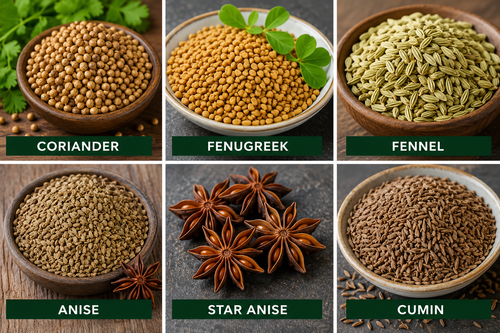
2. Fenugreek
What Is Fenugreek?
Fenugreek is a small golden-brown seed known for its distinctive aroma and slightly bitter, nutty flavor.
Flavor Profile
When cooked, fenugreek develops a warm, savory taste with hints of maple and caramel.
How I Use Fenugreek
A small amount goes a long way. I use it in:
- Beef and goat meat
- Chicken dishes
- Tomato stew
- Rich sauces
- Homemade spice blends
Fenugreek pairs particularly well with slow-cooked meals.
Health Benefits
Fenugreek is a source of fiber and has traditionally been included in many cuisines as part of a wholesome diet.
3. Fennel
What Is Fennel?
Fennel seeds are small, greenish seeds with a naturally sweet, refreshing aroma.
Flavor Profile
They have a mild licorice-like flavor that becomes softer and sweeter during cooking.
How I Use Fennel
Fennel works well in:
- Fish recipes
- Seafood dishes
- Chicken
- Vegetable sauces
- Rice dishes
Its delicate sweetness balances spicy ingredients beautifully.
Health Benefits
Fennel provides dietary fiber and beneficial plant compounds, making it a flavorful addition to many recipes.
4. Anise
What Is Anise?
Anise is a fragrant spice harvested from the seeds of the anise plant. Although its flavor resembles star anise, the two come from different plants.
Flavor Profile
Anise has a sweet, aromatic licorice flavor.
How I Use Anise
I like using anise in:
- Meat dishes
- Tomato stew
- Homemade spice blends
- Slow-cooked sauces
Because of its strong aroma, only a small amount is needed.
Health Benefits
Anise has been used in traditional cooking for generations and contributes natural flavor without artificial additives.
5. Star Anise
What Is Star Anise?
Star anise is a star-shaped spice that comes from the fruit of an evergreen tree. It is prized for its bold aroma and distinctive appearance.
Flavor Profile
Star anise has a warm, sweet licorice flavor that becomes richer as it cooks.
How I Use Star Anise
I often add one whole star anise to:
- Meat stock
- Beef stew
- Goat meat pepper soup
- Tomato stew
- Slow-cooked sauces
It infuses the dish with a deep, comforting aroma.
Health Benefits
Star anise contains naturally occurring aromatic compounds and is widely used in many traditional cuisines.
6. Cumin
What Is Cumin?
Cumin is one of the world’s most popular cooking spices. It is made from the dried seeds of the cumin plant.
Flavor Profile
Cumin has a warm, earthy, nutty flavor with a subtle peppery finish.
How I Use Cumin
Cumin is one of my favorite spices because it complements so many dishes, including:
- Beef
- Chicken
- Fish
- Tomato stew
- Jollof rice
- Vegetable sauce
- Homemade spice blends
It adds richness and depth without overpowering the other ingredients.
Health Benefits
Cumin is naturally rich in antioxidants and has been valued in cooking traditions across many cultures.
My Favorite Homemade Spice Blend
One of the easiest ways to enjoy these spices is by creating your own homemade blend.
Try mixing:
- 2 tablespoons ground coriander
- 2 tablespoons ground cumin
- 1 tablespoon ground fennel
- 1 teaspoon ground fenugreek
- 1 teaspoon ground anise
- ½ teaspoon ground star anise
Store the mixture in an airtight glass jar and use it to season meat, fish, tomato stew, jollof rice, sauces, and roasted vegetables.
Tips for Cooking with Natural Spices
- Toast whole spices lightly before grinding to release their aroma.
- Grind spices in small batches for maximum freshness.
- Store spices in airtight containers away from heat, moisture, and direct sunlight.
- Start with small amounts and adjust to your taste.
- Combine complementary spices to create your own signature seasoning blend.
Frequently Asked Questions
Can I grind all these spices together?
Yes. Many home cooks combine them to create a versatile homemade seasoning blend. Adjust the proportions to suit the dishes you cook most often.
Is star anise the same as anise?
No. Although they share a similar licorice-like flavor, they come from different plants and have distinct characteristics.
Which spice works best for jollof rice?
Coriander and cumin are excellent choices for adding depth and aroma. A tiny amount of fennel can also complement the dish.
Which spice is best for fish?
Fennel, coriander, and cumin pair particularly well with fish, adding freshness and warmth without masking its natural flavor.
How long do ground spices stay fresh?
For the best flavor, use ground spices within six months. Whole spices generally retain their aroma for longer when stored properly.
My Final Thoughts
In our quest to get a natural replacement for maggi and other artificial spices, Natural spices have the power to transform everyday cooking into something extraordinary. Coriander, fenugreek, fennel, anise, star anise, and cumin each bring their own unique aroma and flavor, making them valuable additions to your kitchen.
Whether you’re preparing meat, fish, tomato stew, jollof rice, or vegetable sauces, experimenting with these spices can help you create richer, more memorable meals. Start with small amounts, discover the combinations you enjoy most, and don’t be afraid to make your own signature spice blend. With these six natural spices in your pantry, every meal has the potential to become more flavorful and enjoyable.
Thank You For Reading!