How to Cook Bitterleaf Soup (Ofe Onugbu) – Easy Authentic Nigerian Recipe
Bitterleaf soup, popularly known as Ofe Onugbu, is one of the most cherished traditional soups in southeastern Nigeria. It is especially popular among the Igbo people and is loved for its rich flavour, hearty texture, and nourishing ingredients. Although its name suggests bitterness, properly prepared bitterleaf has only a mild, pleasant taste that blends beautifully with meats, fish, stockfish, cocoyam, and traditional seasonings like ogiri, okpei and uzizia.
If you’ve always wanted to learn how to cook Bitterleaf Soup that tastes authentic and delicious, you’re in the right place. This step-by-step guide will show you everything you need to know, from selecting the best ingredients to achieving the perfect consistency and flavour.
Whether you’re preparing it for a family dinner, a festive celebration, or simply craving a comforting bowl of traditional Nigerian soup, this recipe will help you cook Bitterleaf Soup with confidence.
Why You’ll Love This Recipe Bitterleaf Soup
There are many reasons why Bitterleaf Soup remains one of Nigeria’s favourite traditional meals.
- Rich, authentic Nigerian flavour.
- Perfect for family meals and special occasions.
- Packed with vegetables and protein.
- Easy to customise with your favourite meats and fish.
- Pairs perfectly with pounded yam, eba, semovita, fufu, and wheat meal.
- Uses simple ingredients that are easy to find.
- The rich, savoury flavour of this soup is truly exceptional. Every spoonful is packed with deep, traditional Nigerian flavours that make it difficult to stop at one serving.
What Is Bitterleaf (Ofe Onugbu)?
Bitterleaf Soup, also known as Ofe Onugbu, is a traditional Nigerian soup prepared with washed bitterleaf (Vernonia amygdalina), assorted meats, fish, cocoyam or another thickener, palm oil, crayfish, and local seasonings.
One of the unique features of this soup is its balance of flavours. Although bitterleaf naturally has a bitter taste, it is carefully washed until only a mild bitterness remains. I do not recommend boiling the bitterleaf solely to remove its bitterness because, in my experience, it reduces the authentic flavour of the soup. Instead, I prefer washing the leaves thoroughly by hand until only a mild bitterness remains. This traditional method preserves the natural aroma and gives the soup a richer, more authentic taste. This slight bitterness complements the richness of the palm oil and the savoury flavour of the meats and fish. This is my personal experience.
Bitterleaf Soup is enjoyed throughout Nigeria, but it holds a special place in Igbo cuisine, where it is commonly served during family gatherings, celebrations, and traditional ceremonies.
Ingredients For Bitterleaf Soup (Ofe Onugbu)
- 4 cups washed bitterleaf
- 1 kg assorted meat (beef, cow skin, goat meat, or your preferred combination)
- 2 smoked fish
- Stockfish (optional)

- Dry fish (optional)
- 1 cup cocoyam paste (or your preferred thickener)
- 1 cup palm oil
- ½ cup ground crayfish
- Fresh pepper (to taste)
- Onion (optional)
- Salt to taste
- Homemade meat stock
- 2 wraps of Ogiri Igbo
- 4 balls Okpei (Optional)
- Uzizia seed
More Nigerian Recipes You’ll Love:
- How to prepare Abacha (African Salad)
- 6 natural spices that transforms your cooking
- Okra soup with vegetable
- How to cook Egusi soup
- yam porridge with vegetable
- Ogbono soup with vegetable
- How to cook Okpa
- Ofe Oha (Oha Soup)
- Ofe Akwu (banga Stew)
- Healthy Alternatives to Maggi
- How to cook Afang Soup (Authentic Nigerian Recipe)
- How to cook Egusi Soup with Bitterleaf (Onugbu)
- How to cook Ukwa (African Breadfruit)
- How to cook White soup (Ofe Nsala)
- How to cook Igboka (Traditional Corn flour Delicacy)
- How to prepare Akidi with Ugba
Kitchen Tools You’ll Need
- Cooking pot
- Blender or mortar and pestle
- Knife
- Chopping board
- Wooden spoon
- Bowls
- Sieve
How To Cook Bitterleaf Soup Step-By-Step
Step 1: Prepare the Cocoyam
Boil the cocoyam until soft.
Peel and pound or blend into a smooth paste.
Set aside.
Step 2: Cook Your Proteins
Wash the assorted meat thoroughly and place it in a pot. Season lightly with salt, onions (if using), and enough homemade stock or water. Cook until tender.
Add the stockfish, dryfish and cook until soft.
Step 3: Add Cocoyam paste.
Once the meat, stockfish, and dry fish are fully cooked, I add the cocoyam paste, washed bitterleaf, palm oil, crayfish, ogiri, okpei, ground uziza, blended pepper, and salt all at once. I do not stir immediately. Instead, I cover the pot and allow it to cook for about 5 minutes before stirring gently. This allows the ingredients to blend naturally and develop a richer flavour. Continue cooking until the bitterleaf is tender, stirring occasionally to prevent the soup from sticking to the bottom of the pot. Adjust the thickness by adding a little stock or water if necessary.

This is my preferred cooking method because it allows the flavours of the palm oil, ogiri, okpei, uziza, and crayfish to blend beautifully with the soup base. It also gives the bitterleaf enough time to become tender without overcooking the cocoyam, which helps maintain the soup’s texture.
Step 4: Taste and Serve
Taste the soup and adjust salt if necessary.
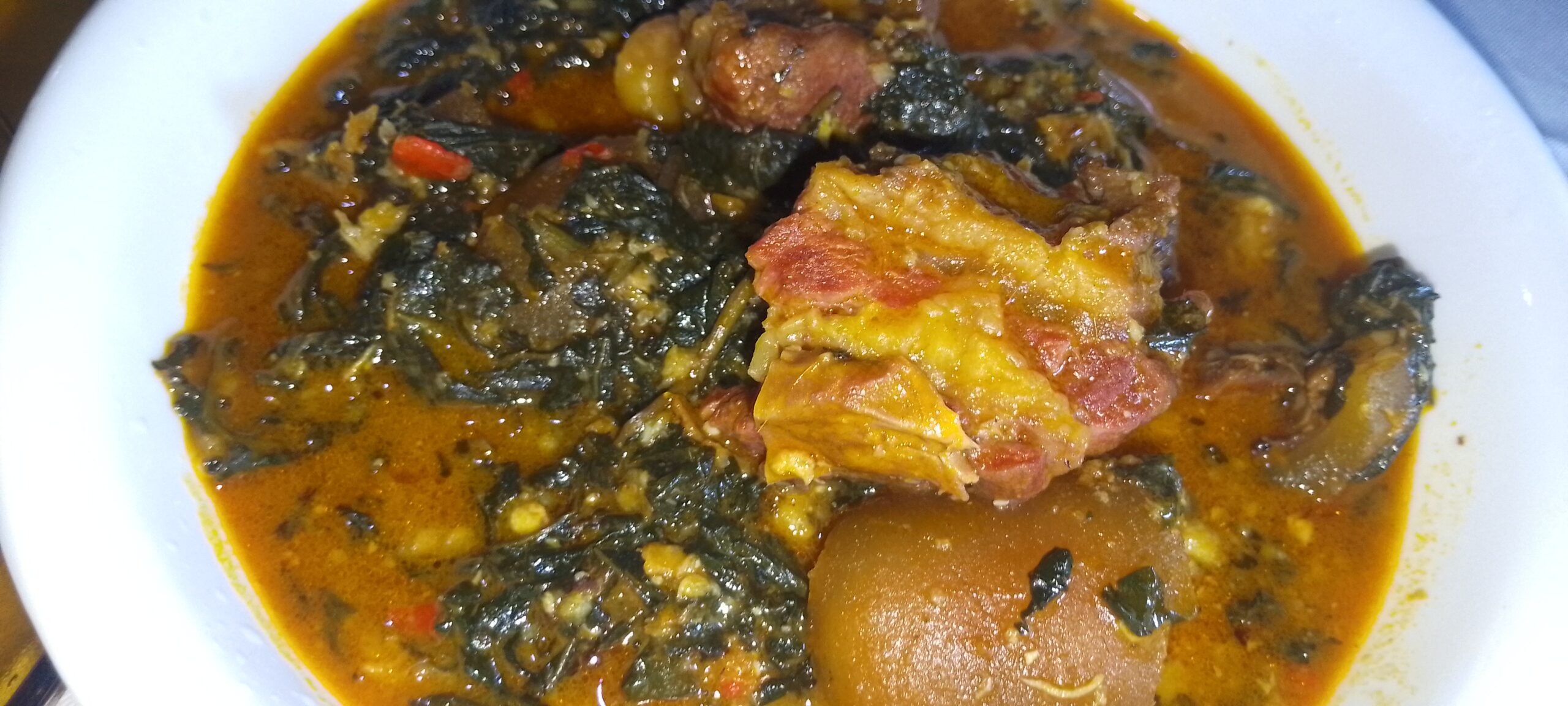
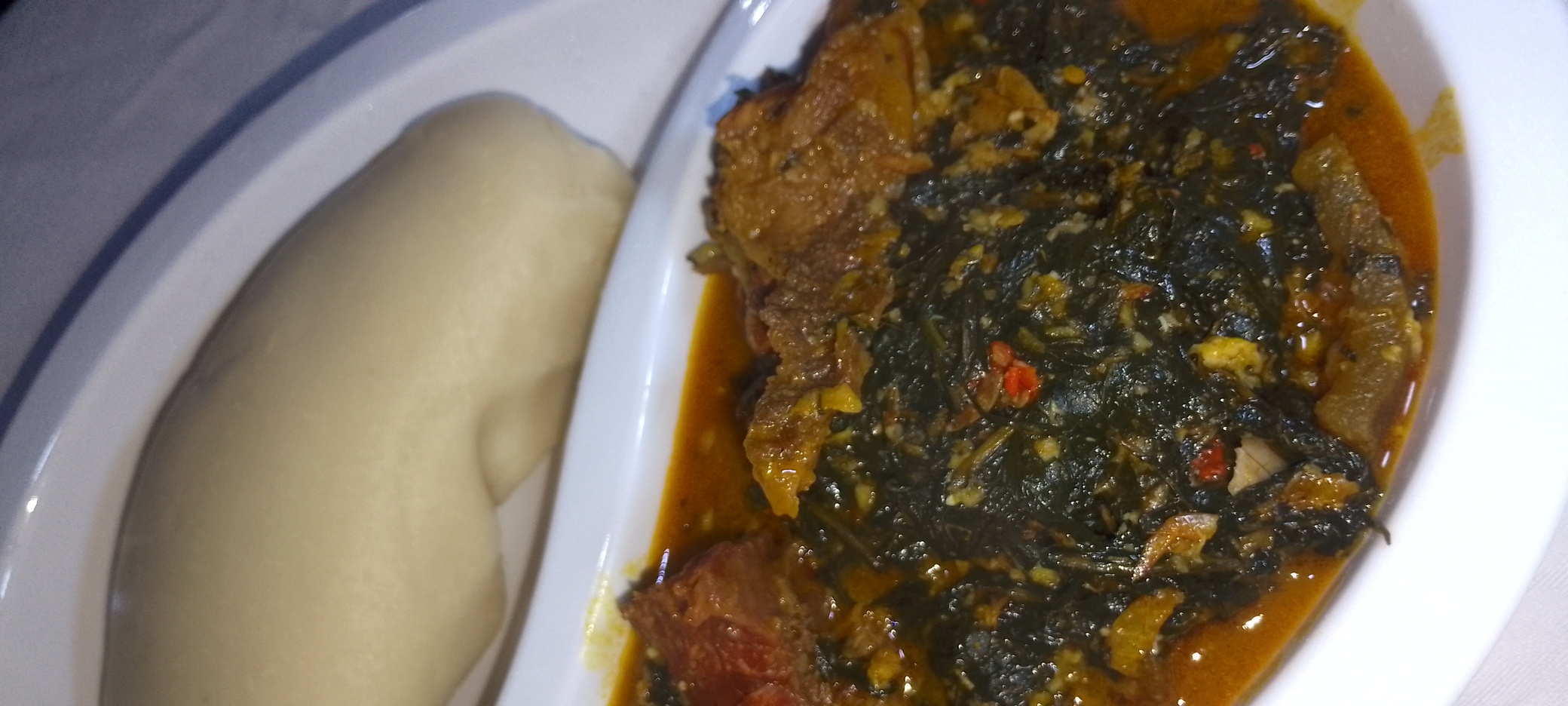
Serve hot with:
- Pounded yam
- Eba
- Fufu
- Semovita
- Wheat meal
Best Tips for Delicious Bitterleaf Soup, from my experience
- Wash the bitterleaf properly to reduce excessive bitterness while retaining its unique flavour.
- Do not cook the bitterleaf for the purpose of removing the bitter taste
- Use good-quality palm oil for the best colour and taste.
- Homemade meat stock adds more natural flavour than relying heavily on seasoning cubes.
- Once your meat and fish broth is ready, add bitterleaf and other ingredients once, to achieve a richer tatse.
- Don’t make the soup too thick, as it will continue to thicken while cooling.
Mistakes To Avoid
- Washing the bitterleaf too little or cooking it.
- Adding too much cocoyam paste unless that’s your preference.
- Overcooking the soup when the bitterleaf has become edible.
- Using stale palm oil.
- Adding too much salt before tasting the soup.
Health Benefits of Bitterleaf Soup
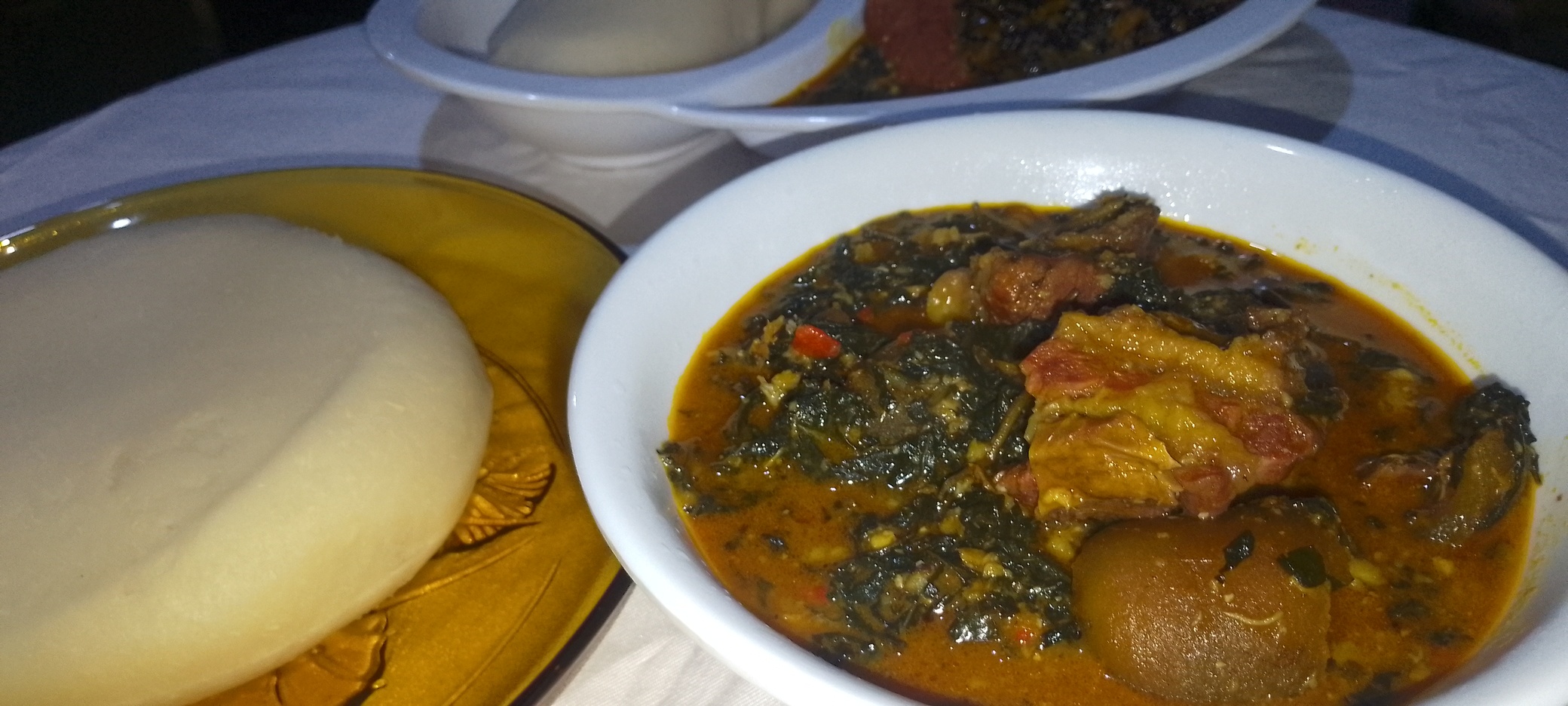
Bitterleaf Soup contains a variety of nutritious ingredients that contribute to a balanced diet.
Rich in Vegetables
Bitterleaf provides fibre and contains beneficial plant compounds.
Good Source of Protein
Meat, fish, and crayfish provide protein, which helps maintain muscles and supports normal body functions.
Contains Healthy Fats
Palm oil contributes vitamin A precursors and healthy fats when consumed as part of a balanced diet.
Naturally Filling
The combination of vegetables, proteins, and healthy fats makes Bitterleaf Soup a satisfying meal.
Nutritional values vary depending on the ingredients and quantities used. This information is intended as a general guide and should not replace professional dietary advice.
What To Serve With Bitterleaf Soup
Bitterleaf Soup pairs wonderfully with:
- Pounded yam
- Eba
- Fufu
- Semovita
- Wheat meal
- Oat swallow
Storage Tips
Allow the soup to cool completely before storing.
Place it in an airtight container and refrigerate for up to three days.
For longer storage, freeze for up to three months.
Best Reheating Method
Transfer the desired quantity into a pot.
Heat over medium heat while stirring occasionally.
If the soup becomes too thick, add a small amount of water or stock.
Avoid reheating multiple times, as this may affect the taste and texture.
Frequently Asked Questions
Why is my Bitterleaf Soup still bitter?
The bitterleaf may not have been washed thoroughly. Wash it several times, squeezing gently until only a mild bitterness remains.
Can I use frozen bitterleaf?
Yes. Frozen bitterleaf works well and saves preparation time.
Can I prepare Bitterleaf Soup without cocoyam?
Yes. Some people use ofor, achi, or oatmeal as alternative thickeners, although cocoyam remains the traditional choice in many recipes.
Can I cook Bitterleaf Soup without palm oil?
Palm oil gives the soup its authentic flavour and colour. While alternatives can be used, the result will differ from the traditional recipe.
Can I prepare Bitterleaf Soup ahead of time?
Absolutely. In fact, many people find that the flavours develop even more after the soup has rested for a few hours.
Final Thoughts
Traditional seasonings such as Ogiri Igbo, Okpei, and Uziza give Bitterleaf Soup its distinctive aroma and authentic southeastern Nigerian flavour. Bitterleaf Soup (Ofe Onugbu) is more than just a meal—it’s a cherished part of Nigerian culinary heritage. Its rich combination of bitterleaf, assorted meats, fish, palm oil, and traditional seasonings creates a comforting dish that has been enjoyed for generations.
With this easy step-by-step recipe, you can confidently prepare authentic Bitterleaf Soup at home, whether you’re cooking for your family, entertaining guests, or simply enjoying a taste of tradition.
If you try this recipe, I’d love to hear how it turned out. Feel free to share your favourite ingredients or cooking tips in the comments!
Thank you for reading!